
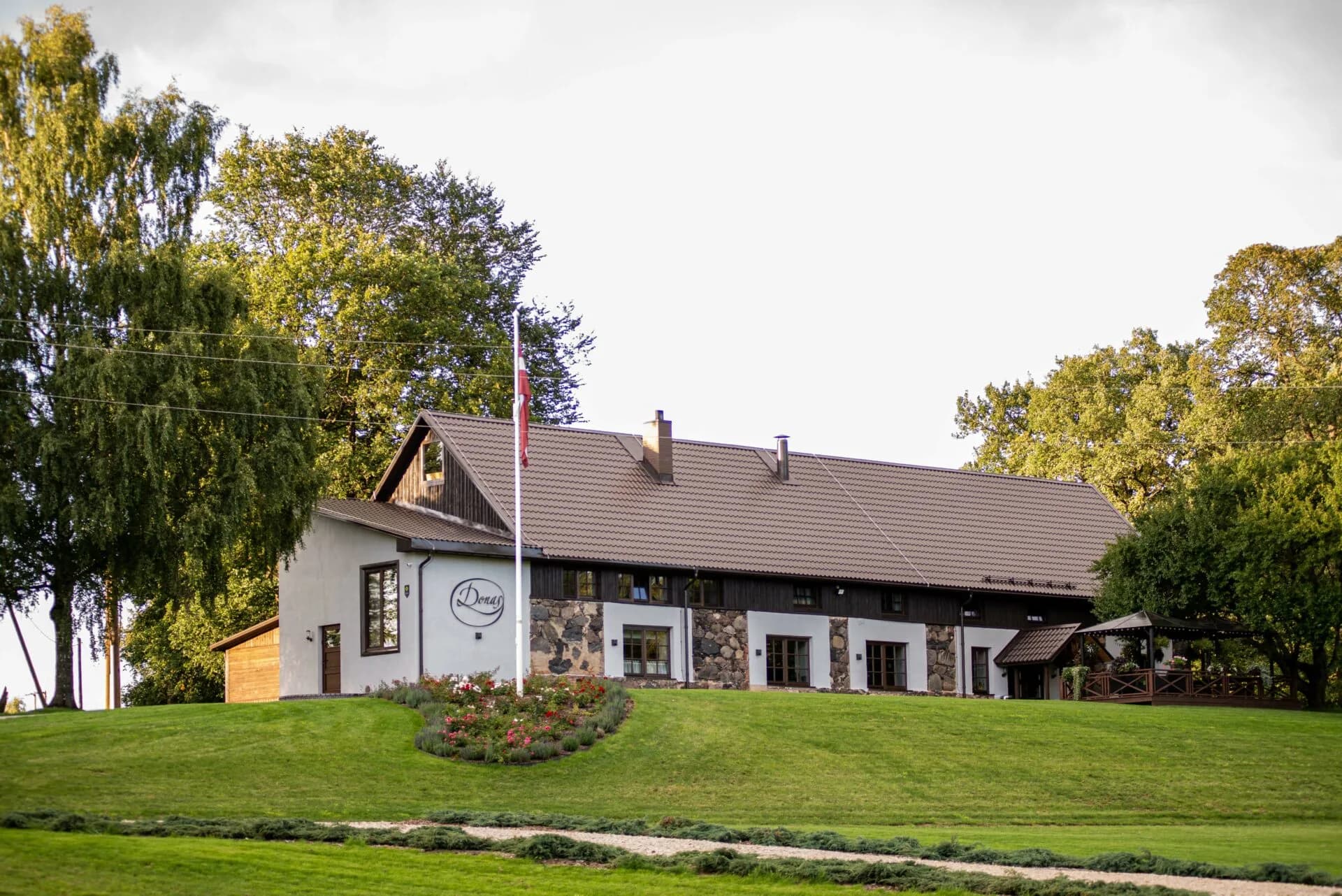
Lielkalnu Manor · Blome, Smiltene, Vidzeme
A place with a story and people at its heart
A new life for the Blome bakery, lovingly created by family and friends
Lielkalnu Manor – a gem of Vidzeme cherished by family and friends
The owner’s dream of a fieldstone house. The Donas guesthouse – now Lielkalnu Manor
Steeped in history, the Blome bakery caught my attention in late autumn 2019 when an advertisement offered it for sale, inspiring me to buy the Donas country property in Vidzeme. From the first moment, this solid fieldstone building on the hilltop enchanted my closest family and friends too. The decision to restore this old place, investing all our energy, work and resources, came quickly and easily – unlike the scale of the work ahead. The entire family and our friends took part in the restoration. We are deeply proud of what we have achieved, and we are sure you will notice and appreciate it too!
Everyone has a dream. Mine was a solid, enduring fieldstone building somewhere in Latvia, embodying both physical and spiritual strength. In late autumn 2019, when I saw a social media post announcing that Blome’s historic bakery was for sale, I knew at once: this was the house I wanted to call my own!
The history of this place stretches much further back than the bakery and guesthouse. The Lejas Jeberi farm was established here in 1878, and the present main building of Lielkalnu Manor was built in 1885 as a horse stable. Later it served as a cattle shed and workshops. In autumn 1974, conversion began to create the Blome bakery, which opened in 1976.
After less than six months of extensive work, the doors of the Donas guesthouse, lovingly created by many helpful, hardworking people, opened to others: a place to enjoy life, celebrate and stay in unique rooms, knowing there is nowhere quite like it in the world.
Opened on 28 August 2020, this welcoming house harmoniously combines Rococo splendour, Art Deco charm and modern comfort, creating an unmistakable atmosphere where each guest feels welcome and cherished, as though everything had been created just for them.
This is a labour of love, created with our own hands, with affection placed in every detail and every object!
We named each room after a village in Blome parish, so guests can choose to stay in Biksēja, Jeberi, Drandi, Jāņmuiža, Kaiberis, Purēnieši or Abuls. In designing the interiors, we wanted something contemporary that would also harmonise with and honour the past.
In 2023, the contemporary Upesmāja building opened on the historic foundations of the Klāvs farm’s granary, built in 1900, adding 23 beds. Each room bears the name of a nearby river or body of water – Nigra, Mutulīte, Asuāna, Nārvelis or Lisa – reflecting the richness and beauty of the local landscape.
The extensive three-hectare grounds feature two lovely terraces and an illuminated pergola with a retractable roof, allowing summer events for up to 50 people. Peace and harmony with nature reign here: an ideal setting for celebrating life’s most beautiful moments or simply relaxing amid the charm of Vidzeme’s landscape.
The spirit of the manor
A name rooted in family memories
After five years of tireless work, landscaping and creating, the idea of changing the name of the place kept returning. The old Blome bakery’s name, Donas, no longer suited the elegant rooms, carefully tended grounds and harmonious surroundings. It felt heavy, carried the hardship of labour and no longer reflected the spirit of the new place.
Yet the right name came slowly… For a long time, I searched for something that best described me and this place. I explored its history and even wrote the book ‘Vienas ēkas stāsts cauri gadsimtiem’ (‘One Building’s Story Through the Centuries’), but the answer still eluded me. Until one night, an old family story came back to me in a dream.
When my parents were young, they dreamed of owning a home, but could not afford it at the time. My father would always reassure my mother: ‘Don’t worry, it will all work out! You’ll see – we’ll live like the Lielauši!’ (The Lielauši were a wealthy family near Iecava, regarded by many as a model of prosperity.)
It was through this ancestral memory that the right and most fitting name came to me.
I, Ilze Kalniņa – someone who thinks through every detail and whose ambition is interwoven with care and love – needed a strong, noble name.
And so Lielkalnu muiža was born: a name combining LIEL – greatness and scale, KALN – strength and my family name, and MUIŽA – nobility and elegance.
That is how Donas became Lielkalnu muiža.
Here everyone can find something special, whether they come to celebrate life or seek peace and quiet.
Lielkalnu Manor – a place our hearts have created with love and care.
The spirit of the manor
Preserving the past, creating new life
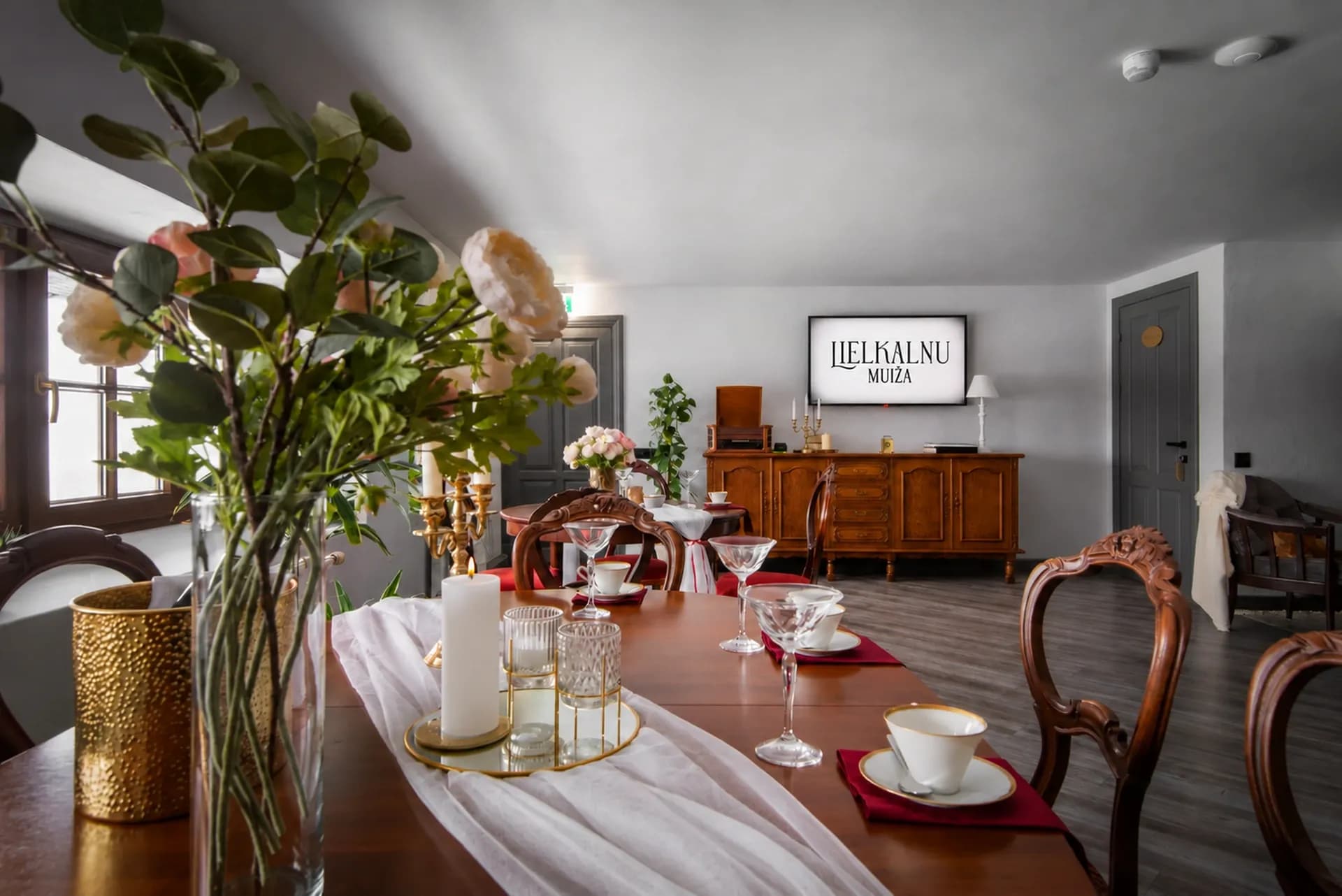
Restored furniture and interior pieces sit alongside modern comforts. Rococo, Art Deco and Gustavian influences give each room its own character.
Let’s continue the story together
Let’s meet at the manor!
The character of a place is best experienced in person. Contact us to arrange a visit and tell us about your plans!
History
One building’s story continues…
From a fieldstone stable and the Blome bakery to a family-created place for relaxation and celebration.
The manor’s atmosphere
Time to meet, celebrate and savour
Lielkalnu Manor is a family-created place for guests who appreciate a personal welcome, thoughtful interiors and closeness to nature.
The manor in numbers
Space for your people and your occasions
Celebrations, accommodation and time in nature on one estate
40
guests in the celebration hall
7
individually designed rooms in the stone building
23
beds in Upesmāja
3 ha
of landscaped grounds
Photographs
The manor today
The manor’s rooms, interiors and surroundings in photographs.
A historic open-air stage right beside the manor
Jeberleja, where summers became occasions
The peaceful waterside stage was once one of Vidzeme’s liveliest summer cultural venues. Theatre, popular music and heavy metal came together here, drawing visitors from Latvia and abroad.
1992–2002 · Circeņi – a theatre summer in tents
Every summer, up to 600 young theatre enthusiasts gathered in Jeberleja. During the week-long camp, a tent village sprang up, with classes in movement, dance, clowning, make-up and other performing arts. At the end, all participants came together for a joint performance on the stage.
1994–2006 · Dziesma manai paaudzei
Jeberleja became one of the festival’s best-known stops. Andris Freidenfelds, also known as Fredis, and the band Labvēlīgais tips created an easy-going atmosphere full of humour. Organisers recall an evening with around 4000 spectators: there were not enough seats on the benches, so people sat on chairs they had brought or on the grass.
2005–2008 · Metalshow.lv Open Air
The two-day metal festival featured bands from the Baltic states, Sweden, the United Kingdom, the Netherlands and the Faroe Islands. Around 4000 visitors attended each year, with Skyforger’s performances particularly eagerly awaited.
Jeberleja open-air stage
A place to come together
The story of the Jeberleja open-air stage began in 1973. It became a place to meet, celebrate and spend time together. In 2025, Lielkalnu Manor’s owner Ilze Kalniņa organised a fundraising campaign to restore the stage roof, raising 13 000 euros. Copies of the book ‘Vienas ēkas stāsts cauri gadsimtiem’ (‘One Building’s Story Through the Centuries’) were offered in exchange for a donation, with all proceeds going towards the roof restoration.